The strongest visualisation workflows today are not a contest between 3D artists and artificial intelligence. They combine the control of a properly built model with AI’s ability to explore, test and refine ideas quickly.
Where AI is already useful
AI is particularly effective at the beginning of a project, when the team is comparing moods, material directions, landscape ideas or different ways to style a space. A 2026 Chaos survey found that concept and pre-design work was the area where respondents saw the greatest impact from AI.
Instead of spending hours building every option to final quality, a visualiser can use AI-assisted tools to create a wider field of ideas, discuss them with the client and then develop the chosen direction with greater confidence.
- Early mood and atmosphere studies
- Fast material and styling variations
- Background, vegetation and entourage exploration
- Image enhancement and selected detail refinement
Why the 3D model still matters
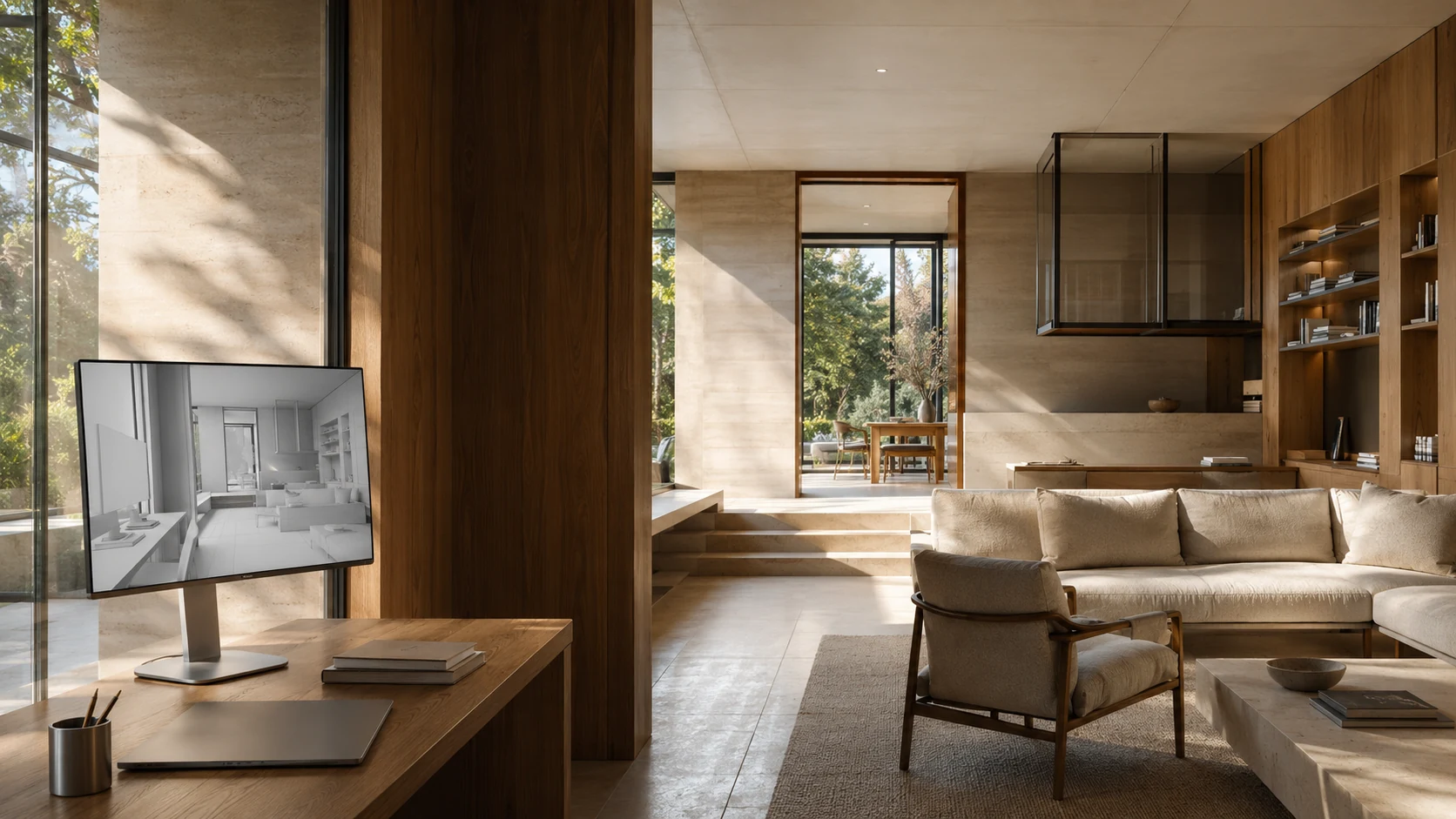
A convincing image is not enough when it changes the architecture. Doors, windows, furniture clearances, ceiling heights and material junctions must remain faithful to the design. A controlled 3D scene gives the project a dependable spatial foundation and allows every camera angle to stay consistent.
AI-generated images can still introduce unexpected geometry, inconsistent details or materials that cannot be specified. That makes them excellent for ideation, but less dependable as a final record of what will actually be built.
The hybrid workflow
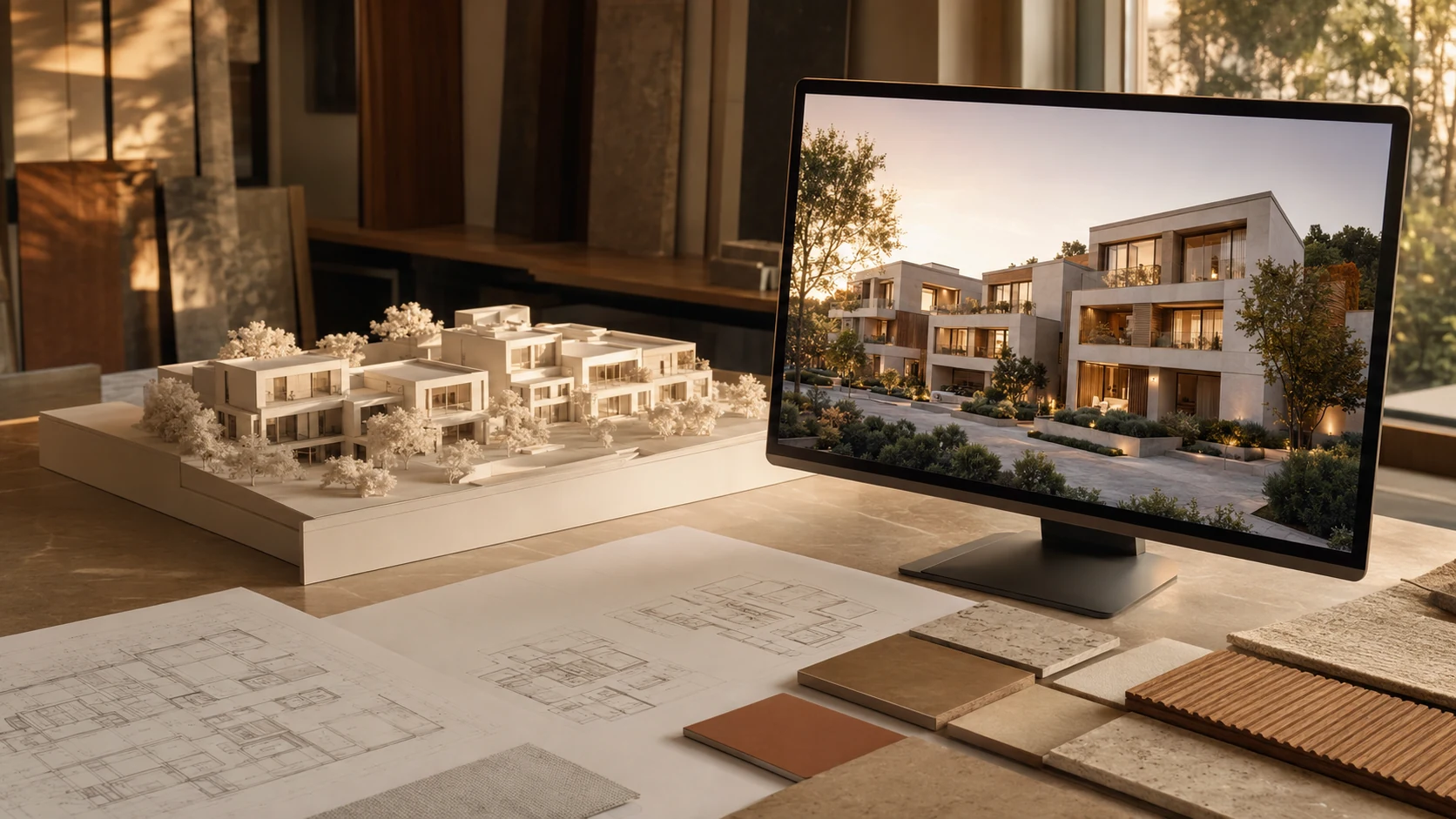
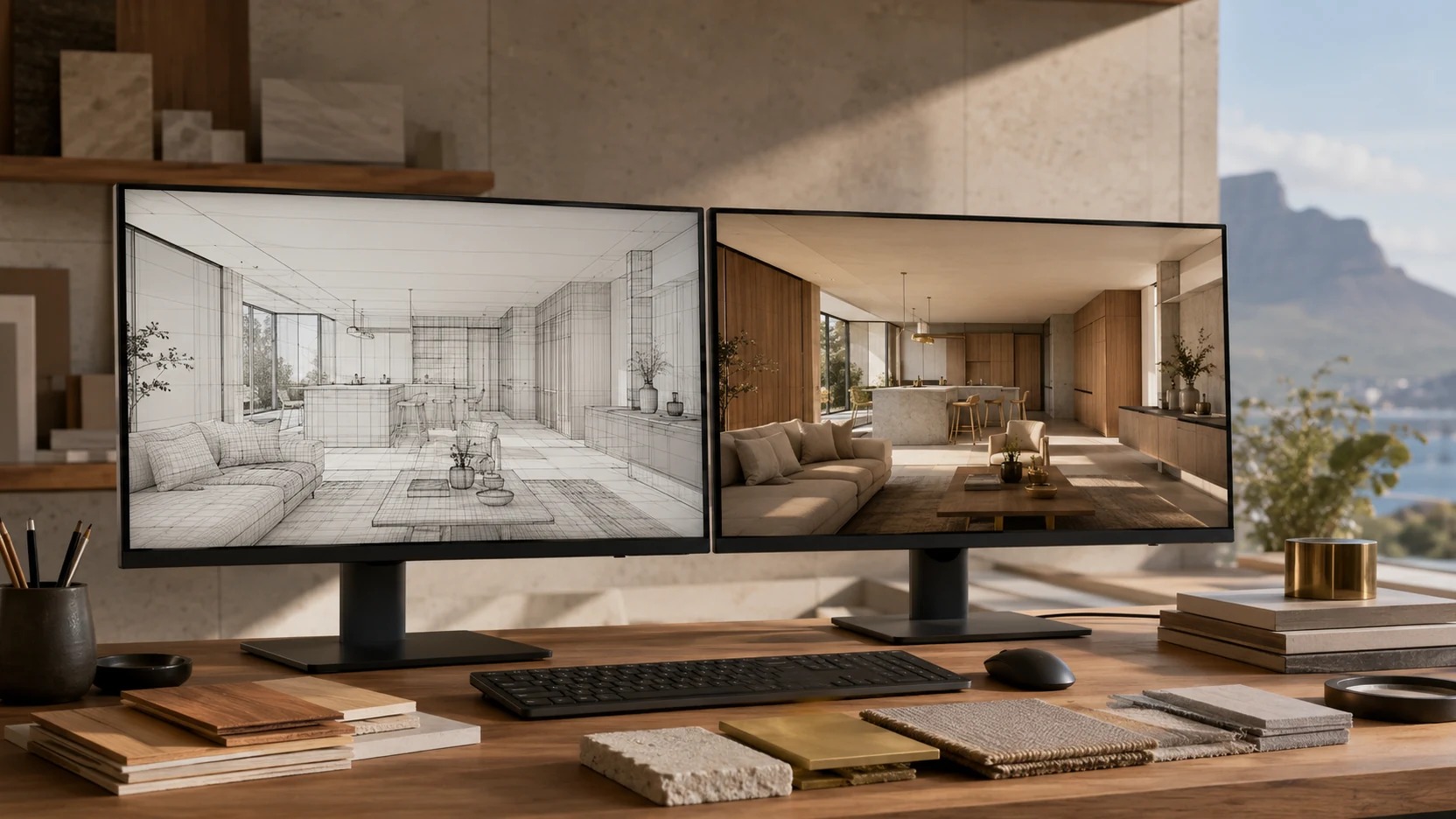
At CT3DR, the useful approach is model first, render with physically believable light and materials, then use AI selectively where it improves the image without rewriting the project. The artist remains responsible for what the image communicates.
The result is a faster creative process with the control clients expect: more room to explore, fewer repetitive tasks and a final image that still respects the drawings.
AI is becoming part of the visualiser’s toolkit, not a replacement for judgement. The best work will come from people who understand both the technology and the architecture it is meant to represent.