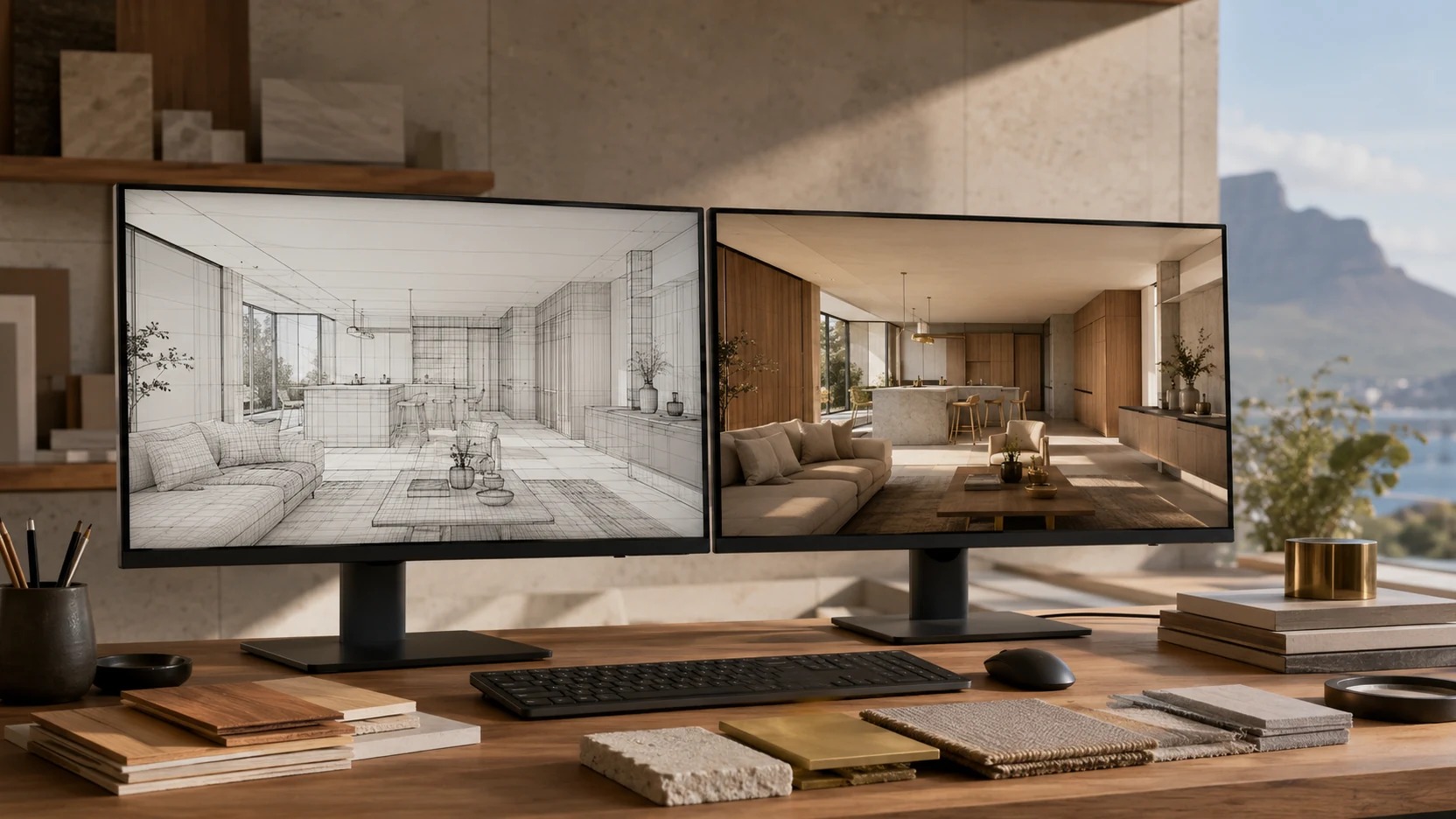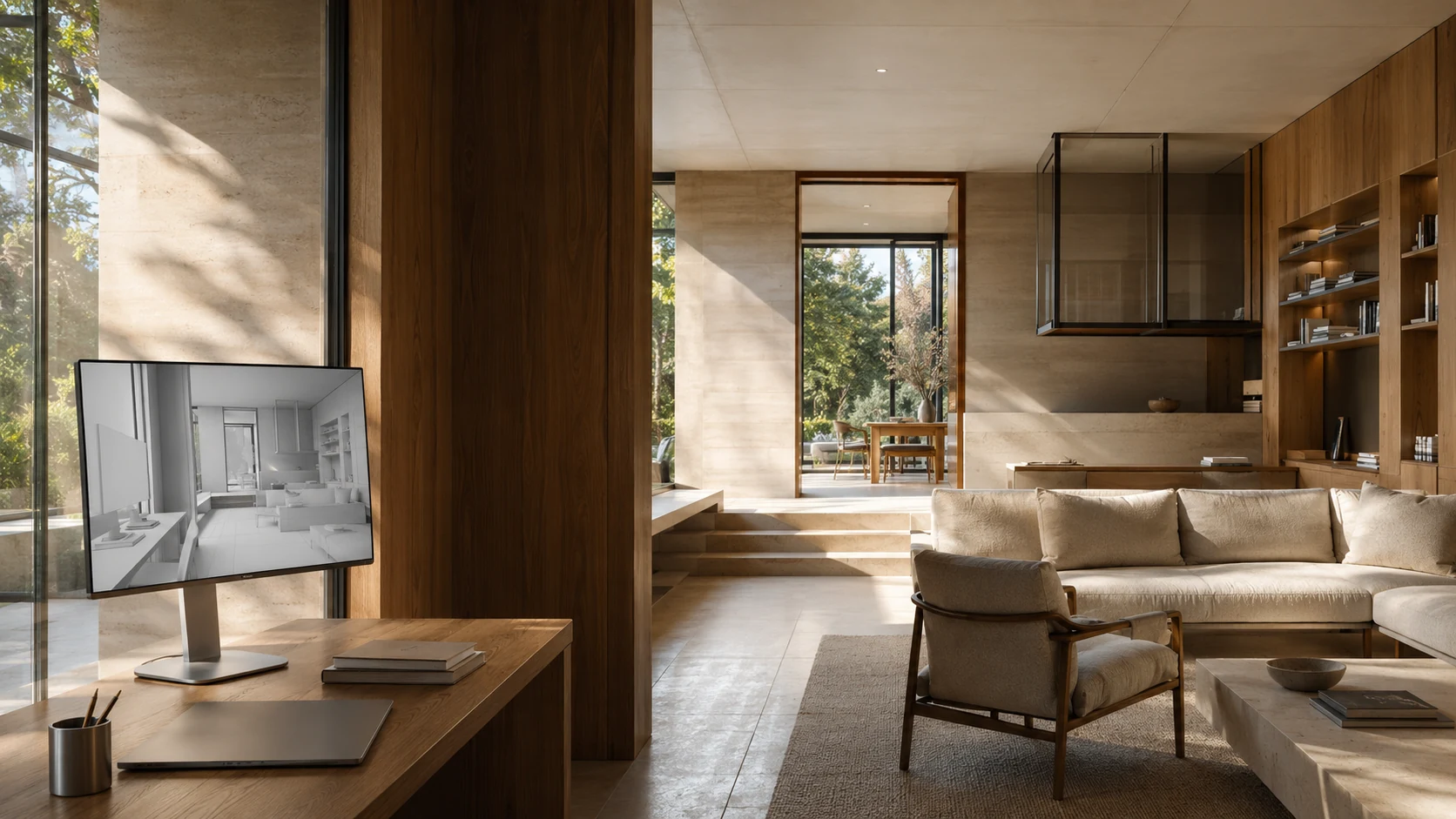
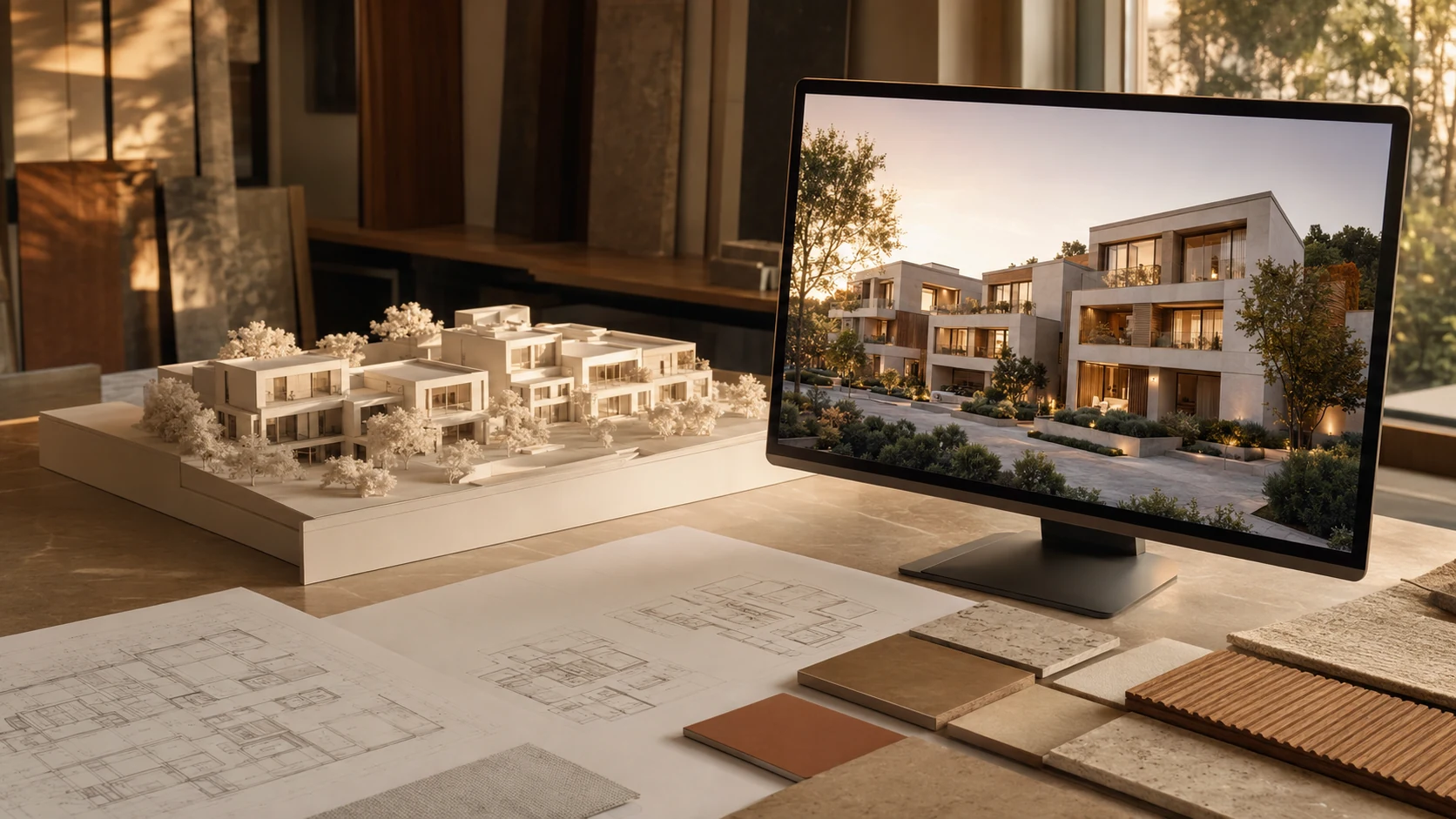
People make decisions more easily when they can see what they are buying. Whether the product is a home, an apartment development, a kitchen or a piece of furniture, 3D rendering turns technical information into a visual proposition.
Make the future feel present
Plans and specifications are essential, but many buyers struggle to translate them into a finished experience. A well-composed render shows scale, material, light, colour and atmosphere in a single frame.
That emotional clarity is valuable in off-plan property sales and product launches. Marketing can begin while the project is still being detailed, giving the sales team usable campaign imagery before a physical sample or completed building exists.
Test before committing
Rendering is also a decision-making tool. Teams can compare finishes, furniture arrangements, façades, lighting or branding before committing to manufacturing or construction. Autodesk notes that visualisation can reduce the need for physical prototypes and help identify design problems earlier.
A change made in the digital model is usually far less expensive than a change made on site or after a product reaches production.
- Align clients and decision-makers around one clear direction
- Create launch material before the finished product exists
- Compare design alternatives without building physical samples
- Reduce misunderstandings between technical and non-technical teams
Build trust through accuracy
The marketing value of a render depends on credibility. Accurate proportions, realistic materials and believable lighting help the image feel aspirational without becoming misleading.
The closer the visualiser works with the designer, architect or product team, the more useful the final imagery becomes across sales presentations, websites, brochures, approvals and investor discussions.
3D rendering does more than show an object. It gives the idea context, creates desire and helps a customer understand the value before the first unit is produced or the first wall is built.