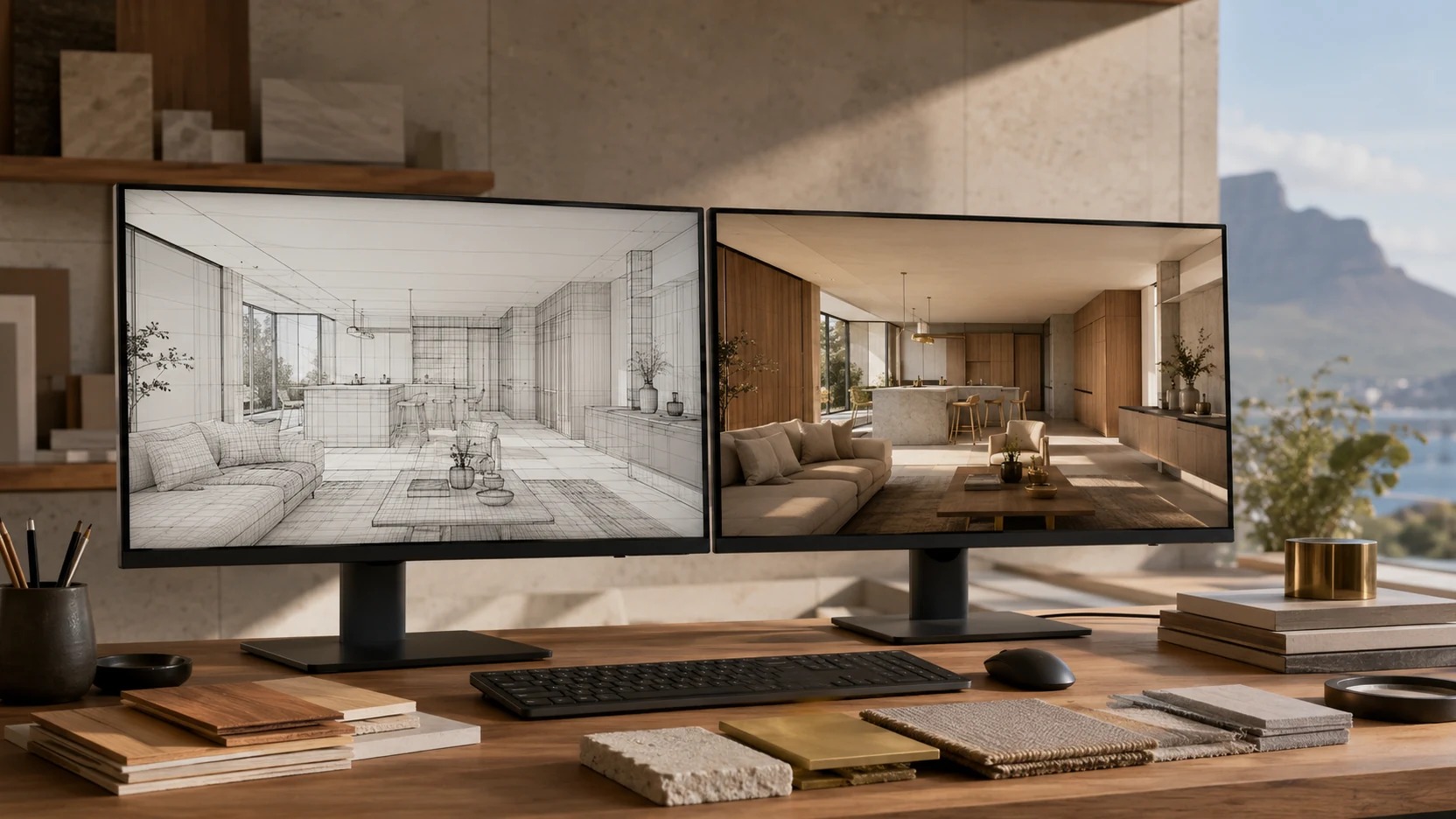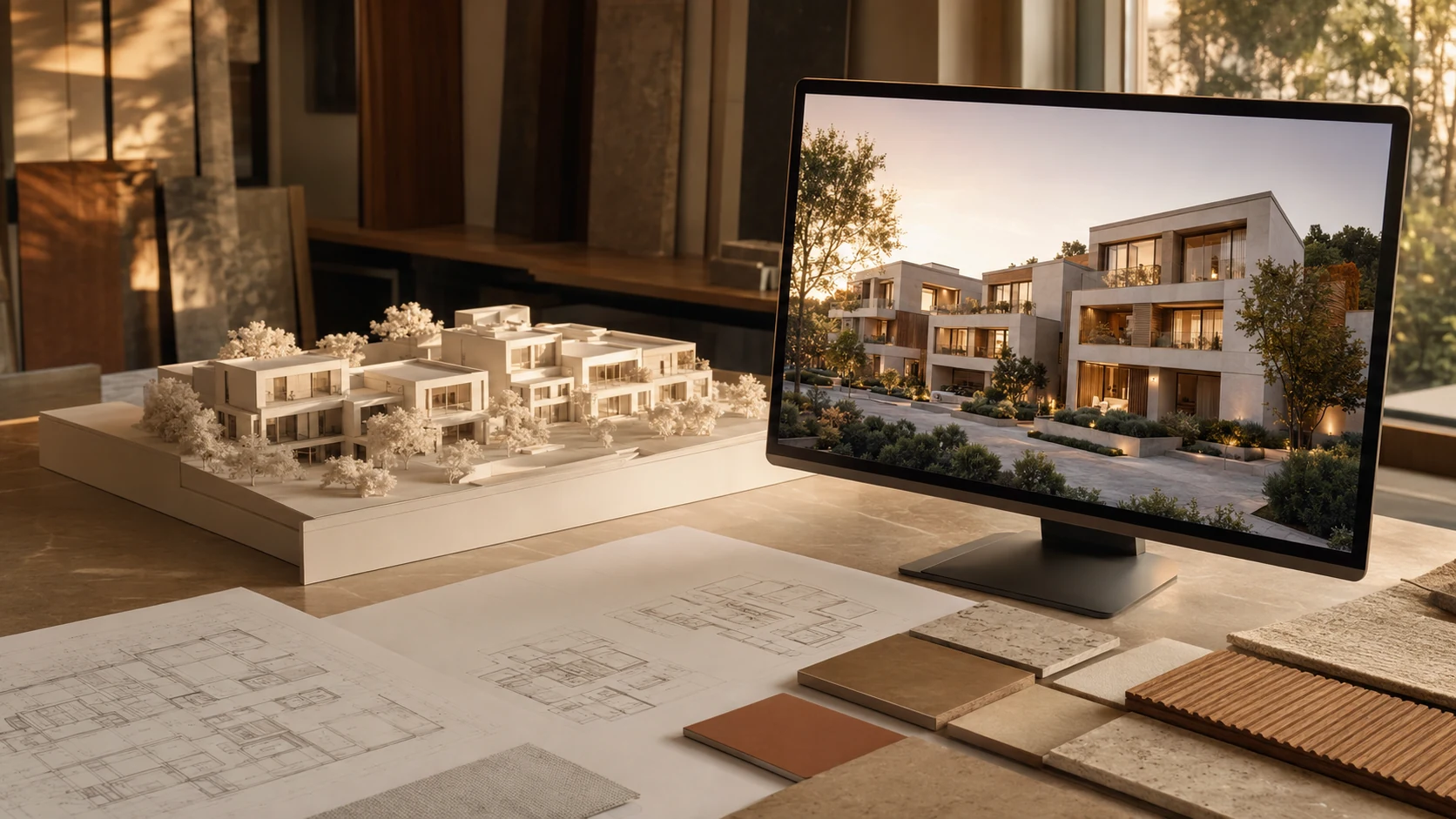
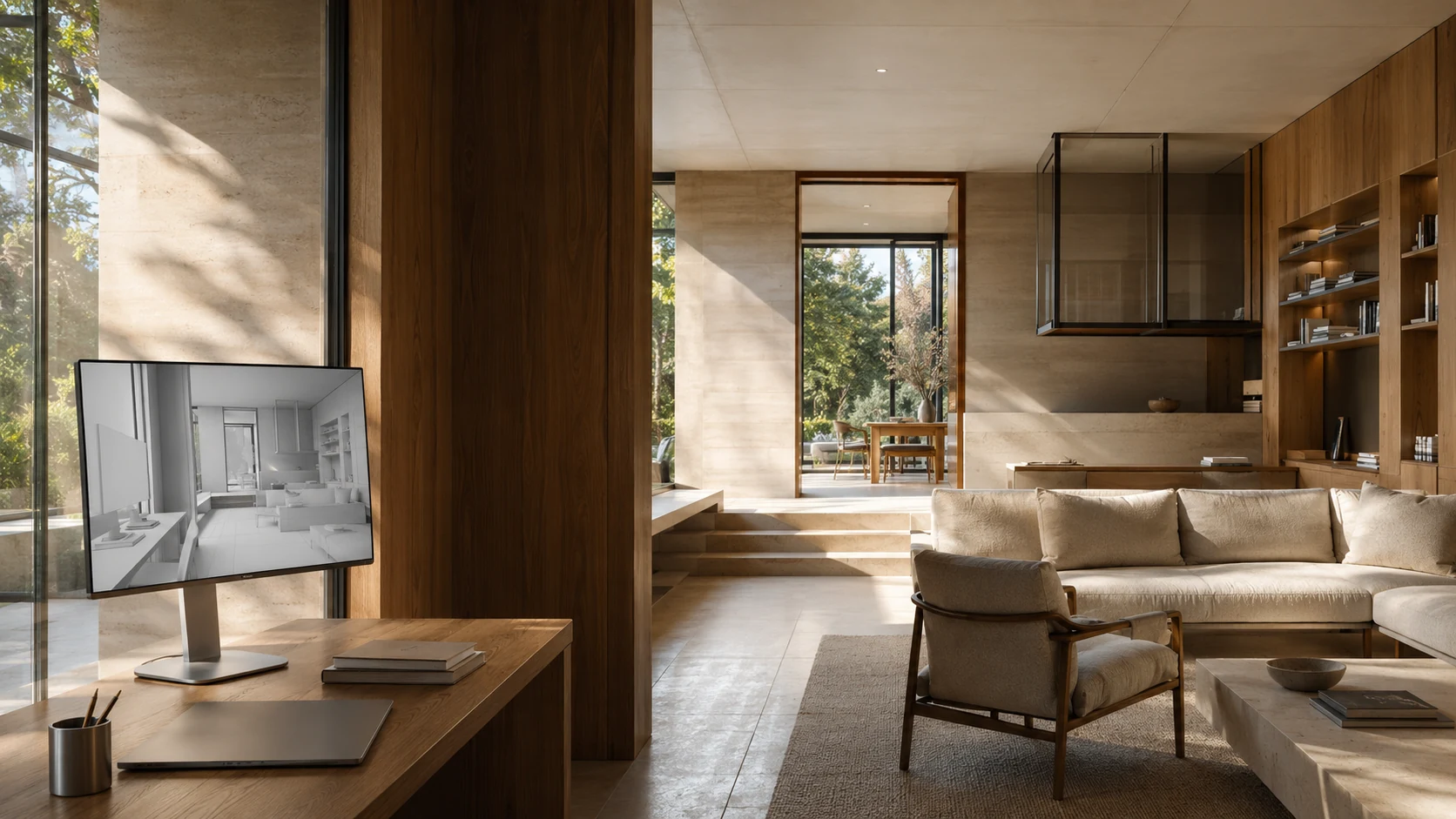
A rendering engine has one central job: translate a 3D scene into an image. V-Ray has remained a leading professional choice because it does that job with a balance of realism, flexibility and control.
Physically believable light
Architectural images depend on the way light moves through glass, reflects from stone, softens across fabric and changes the perceived colour of a finish. V-Ray’s physically based tools allow a visualiser to build those relationships deliberately.
That accuracy matters in both dramatic marketing images and quieter design studies. Natural daylight, artificial fixtures and reflective materials can be tuned as one lighting system rather than treated as separate effects.
Control from draft to final
V-Ray supports fast previews while a scene is being developed and high-quality output when the design is approved. Artists can refine cameras, materials, atmosphere and exposure without losing the structure of the underlying model.
Chaos provides V-Ray integrations for widely used platforms including SketchUp, 3ds Max, Rhino, Revit, Maya and Cinema 4D. This makes it practical for studios that need the renderer to fit existing design workflows.
- Physically based materials and lighting
- CPU, GPU and interactive rendering options
- Detailed control over cameras, atmosphere and post-production
- Integration with major modelling and design platforms
A mature production ecosystem
Professional work is not only about the final pixels. Asset libraries, material tools, frame buffers, denoising, cloud rendering and team workflows all influence delivery. V-Ray’s long development history gives studios a mature set of tools around the renderer itself.
Newer real-time and AI-assisted features are extending that workflow, but the core reason for V-Ray’s position remains the same: it lets artists make repeatable, high-quality decisions rather than relying on a one-click look.
Software does not create a strong image on its own. In skilled hands, however, V-Ray provides the precision and flexibility needed to turn design intent into a convincing visual experience.